
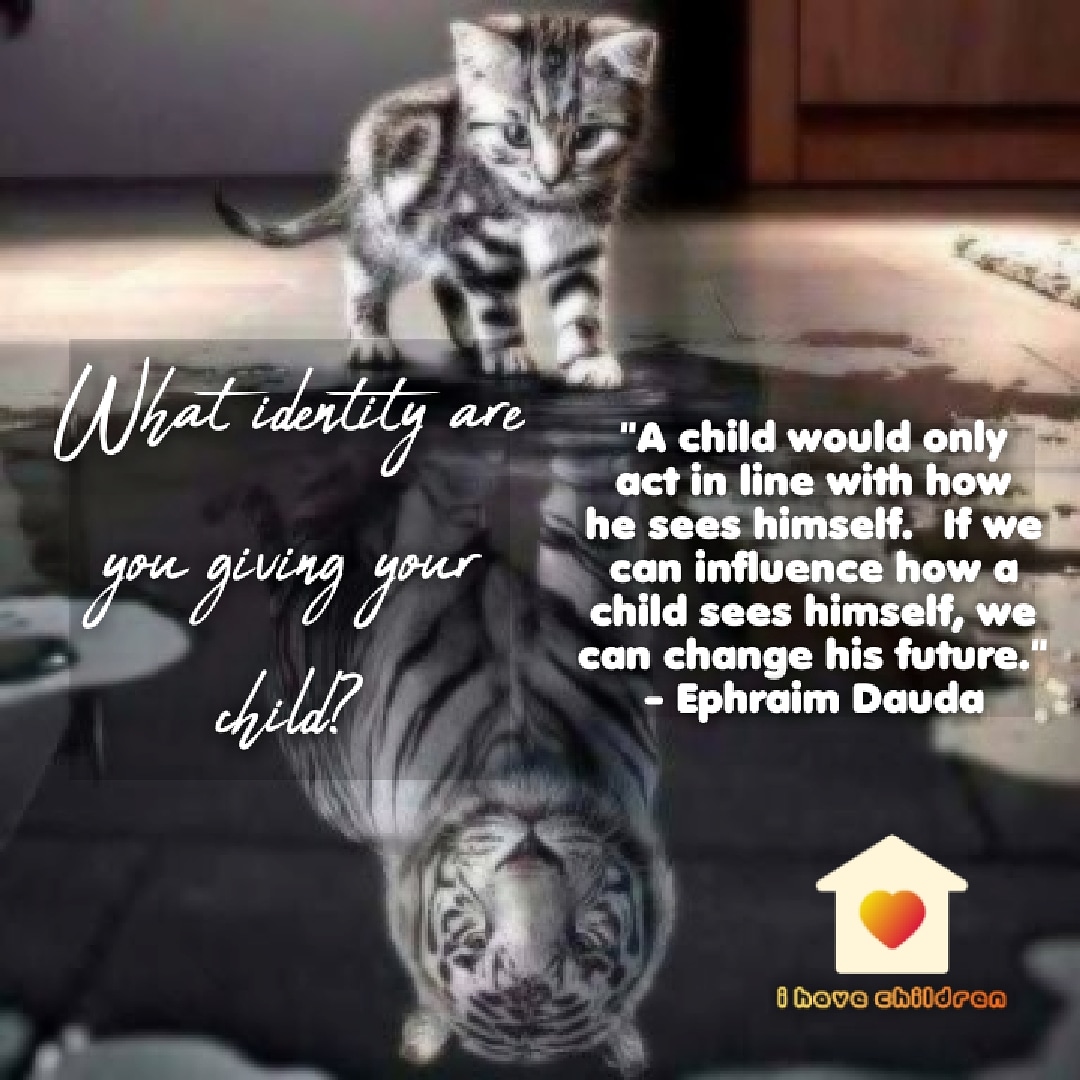
“You are..”, That’s the most powerful line in parenting. Telling your child who she is. Every child looks to his parent for identity. It’s a privilege to be tools in God’s hands in the forming of a child’s soul. Therein lies his future, determining whom she would grow up to become; limits, strengths and destiny.
“A child would only act in line with how he sees himself. If we can influence how a child sees himself, we can change their future.”
Ephraim Dauda
There are two types of parents. Those who mirror greatness to their children and those who give their children a defeated image of themselves? Every child is an end product of the identity his parents gave him every day of his life. Identity crisis is one of the biggest perils in our societies today. If identity crisis is not dealt with it soon grows into depression, depression matures into suicidal thoughts and we know the rest. Parents, teachers, environment and even media are all involved in the formation of your child’s identity. That’s why a parent is responsible for making sure the children have teachers that are mentally, socially and emotionally fit to teach their children and also that their neighbourhood is a safe zone for raising children. Likewise, parents have to guide their children’s exposure to media. But amongst these influences, the influence of parents is most pivotal.
There are various kinds of identity; self-image, nominal and others. In this post, we’ll focus on self-image.
In matters of identity, it is important to note that our children shouldn’t be given dual identities that are alternating. For example, calling your child an intelligent girl and changing your words when she acts foolishly. It’s going to frustrate your efforts to give your child a sound self-image. Let your words be wholesome so that their identity would follow suit. Here are some principles to help in this assignment:
- Never curse your child, only bless.
- Make it a daily habit to mirror a good self-image for your child.
- Whenever you speak wrongly and inappropriately to your child, apologise genuinely.
- Don’t compare your child with other children. They’re different.
- Keep a copy of these principles somewhere open and visible for you (the parent).
- Every child was born for greatness. Everyone. Don’t forget.
- Your children are for signs and wonders only.
When we lose it and say what we shouldn’t say to our children, it’s important to come back and apologise. A parent who apologises for doing wrong is teaching his child character and also preserving the identity-building work he has been doing. Here are some ways parents and even teachers can help build a child’s self-esteem:
- Focus the child on his strengths instead of his weaknesses.
- Give your child work to do. The work should be age-appropriate. It’ll help him see that he is able to achieve.
- Help your child to do things.
- Keep them around people who encourage and build up their self-image.
- Model a good self-image in front of the kids.
- Call them great names; King, Genius…
- Use affirmative words regularly.
Regular affirmations build a child’s self-confidence. Here are a few affirmations you can see to help your child build strong and healthy self-confidence:
- You are loved
- You are special
- You are Intelligent
- You can do anything
- You are important
- You are here for a special purpose
- You are handsome (beautiful).
By middle school, 40-70% of girls are dissatisfied with 2 or more parts of their body. 53% of 13-year-old American girls are unhappy with their bodies. This number grows to 78% by the time girls reach 17. Depression is a leading cause of disability worldwide and is a major contributor to the overall global burden of disease. The earlier we(parents) start prioritising this issue, the greater the chances of our children winning every life battle in the future.
What other ways can we help build a child’s self-image? Please suggest in the comments section below.

 I Have Children